-
1. What makes INA bearings different from other precision bearings?
-
2. How fast can a linear actuator actually move?
-
3. Why would I choose INA needle roller bearings over ball bearings?
-
4. What's the difference between an INA bearing and a generic 'compatible' bearing?
-
5. When should I choose a pneumatic linear actuator over an electric linear actuator?
-
6. How do I verify I'm getting genuine INA bearings—not counterfeits?
If you're specifying bearings or actuators for a project—especially one with a tight timeline—you've probably asked these questions. I'm not a sales guy. I'm the person who coordinates rush orders when something's about to go wrong. Below are the six questions I hear most often, answered with what I've actually seen work.
1. What makes INA bearings different from other precision bearings?
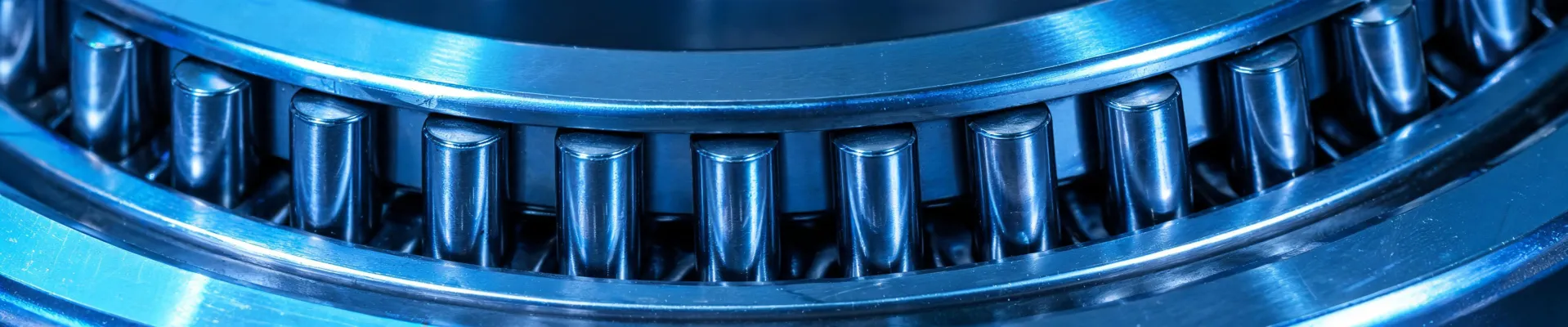
Most buyers focus on the brand name and completely miss the actual engineering difference. What most people don't realize is that INA's core strength is in its needle roller and linear technology. The company (now part of Schaeffler) essentially pioneered the needle roller bearing design. So when you spec an INA needle roller bearing, you're getting a product line that's been refined for decades specifically for high-load, compact-space applications.
(This was back in the 1940s when they introduced the first cage-guided needle roller bearing. The design principles haven't changed much—because they were already right.)
Here's something vendors won't tell you: the real advantage isn't just the bearing itself—it's the system engineering. INA designs their bearings to work with specific housing designs, lubrication paths, and sealing concepts. If you pair an INA bearing with a generic housing, you're leaving performance on the table.
2. How fast can a linear actuator actually move?
The question everyone asks is "what's the maximum speed?" The question they should ask is "what speed can I maintain reliably over the duty cycle?"
For pneumatic linear actuators, speeds of 1-3 m/s (about 3-10 ft/s) are common in standard applications. But here's the nuance: maximum theoretical speed and practical speed are completely different numbers.
I knew I should double-check the duty cycle before quoting a speed spec, but thought "it's a standard application." Well, the odds caught up with me when the actuator overheated after 200 cycles. That was the one time I forgot that higher speed means more friction, more heat, and more wear on seals.
For a pneumatic linear actuator, factors that limit real-world speed include:
- Air supply pressure and flow rate (your compressor matters)
- Load mass (heavier loads accelerate slower)
- Cushioning requirements (at high speed, you need proper end-of-stroke dampening)
- Duty cycle (continuous high-speed operation generates heat)
In practice, I've found that most standard applications run at 0.5-1 m/s for reliability. Pushing beyond that? You're into special seal territory, and that changes the lead time.
3. Why would I choose INA needle roller bearings over ball bearings?
Most buyers focus on load rating and completely miss the space constraint. Needle roller bearings have a very high load capacity relative to their cross-sectional height. In a gearbox or transmission where radial space is tight, an INA needle roller bearing can handle loads that would require a much larger ball bearing.
Here's a quick comparison (as of January 2025, based on typical catalog ratings):
INA RNA49 needle roller bearing (30mm shaft, 45mm OD, 17mm width):
Dynamic load rating ~28 kN. Cross-section height: 7.5mm.
Comparable ball bearing (30mm shaft, 55mm OD, 13mm width):
Dynamic load rating ~19 kN. Cross-section height: 12.5mm.
The needle roller bearing is 40% thinner but handles 47% more load. That's the trade-off. The downside? Needle roller bearings are more sensitive to misalignment and contamination. You need better housing alignment and better sealing.
4. What's the difference between an INA bearing and a generic 'compatible' bearing?
Here's something vendors won't tell you: the first quote is almost never the final price for ongoing relationships. There's usually room for negotiation once you've proven you're a reliable customer.
But to answer the question: the difference comes down to manufacturing tolerances, material quality, and testing.
INA bearings are manufactured to P6 or P5 tolerance classes as standard (depending on series). Generic 'compatible' bearings might claim the same dimensions, but the running accuracy, internal clearance, and noise/vibration characteristics are often different.
I should add that for some applications, generic bearings work fine. If you're building a low-speed conveyor with low loads, a generic bearing might be perfectly adequate. But if you're designing a machine tool spindle, a precision gearbox, or an application where vibration and heat matter, the difference in bearing steel quality and heat treatment shows up in mean time between failures (MTBF).
We didn't have a formal bearing selection process for non-critical applications. Cost us when a generic bearing failed in a pilot run and we had to re-certify the assembly. (Note to self: always have a criticality classification for bearing selection.)
5. When should I choose a pneumatic linear actuator over an electric linear actuator?
This is one of those decisions where there's no universal 'better'—just different trade-offs.
Pneumatic linear actuators excel when:
- Speed is critical — pneumatic systems can achieve rapid cycling (0.5-2 seconds per stroke is common)
- The environment is harsh — pneumatic actuators handle dust, washdown, and extreme temperatures better than electric
- Cost per axis is a concern — pneumatic systems have a lower upfront cost
- You already have compressed air — no additional power infrastructure needed
Electric linear actuators excel when:
- Precision positioning is required — servo-controlled electric actuators offer repeatability within ±0.01mm
- Variable speed or force control is needed — pneumatic is inherently binary (extend/retract) without complex proportional valves
- Energy efficiency matters — compressed air is expensive; electric is more efficient for continuous operation
In my experience coordinating rush orders, pneumatic actuators are almost always faster to source than electric. Off-the-shelf pneumatic cylinders ship in days; custom-spec electric actuators often take 4-6 weeks. (Should mention: we'd built in a 3-day buffer.) For emergency projects, pneumatic wins on availability.
6. How do I verify I'm getting genuine INA bearings—not counterfeits?
Most buyers focus on the price and completely miss the supply chain risk. Counterfeit bearings are a real problem, especially for high-demand brands like INA.
Three things I check on every rush order:
- The packaging — Genuine INA bearings come in Schaeffler-branded packaging with consistent printing quality. Blurry logos or misaligned text are red flags.
- The bearing markings — Genuine bearings have laser-engraved or precisely stamped part numbers, not painted or Poorly etched marks. The font and depth should be consistent.
- The authorized distributor list — INA maintains an official distributor network. If the price is 40% below market rate from an unknown seller, it's suspicious. (circa 2023, things may have changed.)
We paid $800 extra in rush fees for expedited shipping from an authorized distributor, but saved the $12,000 project. The client's alternative was a counterfeit bearing failure that would have caused machine downtime. That's when we implemented our 'verified source only' policy.
Small doesn't mean unimportant—it means potential. When I was starting out, the vendors who treated my $200 orders seriously are the ones I still use for $20,000 orders. The same applies to bearings: a single genuine bearing, properly specified, can make the difference between a machine that runs for years and one that fails in months.
Note: Pricing and availability data are based on observations from Q1 2025. Always verify current stock and pricing with authorized INA distributors.

Elena Markovic
Elena Markovic is an independent industrial motor and drive systems analyst covering induction motors, servo motors, stepper motors, and variable-frequency drives. She examines IEC 60034-30-1 efficiency classes, IEC 61800-9-2 drive-system losses, speed-torque curves, duty cycles, thermal limits, and feedback compatibility across operating envelopes. Her evidence-led guides help OEM engineers and plant teams select efficient motion packages, plan integration, and reduce commissioning risk.