-
Q1: What's the difference between INA roller bearings and ball bearings?
-
Q2: How do I choose INA pillow block bearings?
-
Q3: When does an INA linear actuator make sense?
-
Q4: What is a FAG spherical bearing actually for?
-
Q5: What does VFD stand for, and why should it change your bearing choice?
-
Q6: Why is the bearing suffix more important than the brand name?
-
Q7: What is the bottom line before you place a bearing order?
Let me start with a confession. I've been ordering bearings and linear components for a mid-sized automation shop for nine years. In that time, I personally made and documented 12 significant mistakes—totaling roughly $38,000 in wasted budget. I've ordered the wrong bearing series, skipped a suffix, and sized a linear actuator by thrust while forgetting moment loads. So trust me when I say these are the questions I wish someone had asked me in my first year.
Here's what this FAQ covers:
- INA roller bearings vs. ball bearings
- INA pillow block bearings
- INA linear actuators
- FAG spherical bearings
- What VFD stands for and why it matters
- Bearing suffixes
Q1: What's the difference between INA roller bearings and ball bearings?
Ball bearings have point contact. That means low friction and decent speed capability, with the ability to take a mix of radial and light axial load. If your shaft is reasonably aligned and the load is light to medium, a deep groove ball bearing is often a no-brainer.
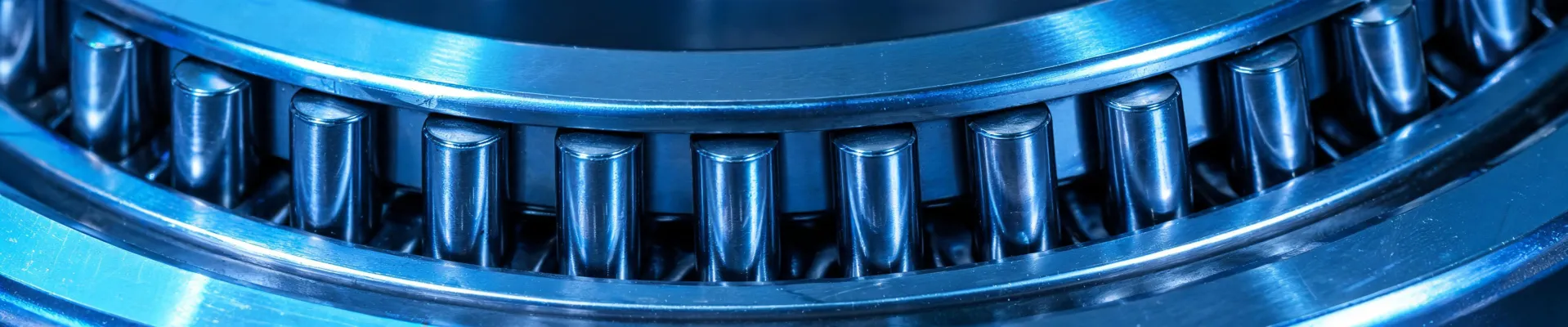
INA roller bearings use line contact instead. Cylindrical rollers, needles, tapered rollers, or spherical roller elements give them higher radial capacity and stiffness for the same size. Cylindrical roller bearings are great for pure radial loads; needle bearings save space; spherical and tapered types handle heavier mixed loads.
My first-pass tool: check the C/P ratio from ISO 281. The basic rating life for roller bearings is L10 = (C/P)10/3. If the calculated life doesn't get you where you need to go, don't try to fix it with a 'stronger brand.' Change the bearing type or the size.
I have mixed feelings about the phrase 'heavy duty' on some bearings. On one hand, it makes people feel safer. On the other, a heavy-duty bearing with the wrong clearance or fit can fail quicker than a standard one installed correctly. In 2017, I put a ball bearing in a conveyor drive where shaft deflection was the real problem. It chattered and failed in about six weeks. The INA roller bearing with the same bore handled the deflection and is still running.
If the load is slow and heavy, also check the static load rating from ISO 76. That catches the cases where the bearing can be overloaded while standing still.
Q2: How do I choose INA pillow block bearings?
First, stop treating 'pillow block' as one product. INA pillow block bearings are an insert bearing mounted inside a housing, and the locking method on the shaft changes how it behaves. You can get set-screw locking, eccentric collar, concentric collar, or tapered adapter designs.
Set-screw locking works fine for light-to-medium, steady loads. For reversing loads or vibration, set-screws can work loose and fret the shaft. Eccentric collar locking grabs the shaft with a cam action and is usually a better fit when the load changes direction. Concentric locking is my pick when true running and concentricity matter, because it clamps evenly around the shaft.
I once ordered 50 INA pillow block bearings with set-screw locking for a reversing conveyor. The load looked modest in my spreadsheet. Checked it myself. Approved it. Then the commissioning crew watched the shaft score. We replaced all 50 units with eccentric collar versions. $2,200 mistake, plus a two-week delay.
Also, remember that a pillow block housing allows a small amount of angular alignment, but not infinite. Shimming the housing costs far less than a scored shaft.
Q3: When does an INA linear actuator make sense?
An INA linear actuator, in the broad sense, is a linear motion module that combines a guide with a ball screw or lead screw inside a profile. You give it a motor, and you get controlled electric linear motion without compressed air.
It makes sense when you need:
- repeatability better than a pneumatic cylinder can deliver
- multiple intermediate stops or complex motion profiles
- clean, quiet operation
- controlled acceleration and deceleration
It makes less sense when you just need a fast, short push at high cycle rates and you already have compressed air on the machine. Don't over-engineer the simple axes.
My linear actuator mistake happened in 2019. I sized an INA actuator by thrust only. The required push force was fine, but I forgot the moment load from an offset carriage. Under deceleration, the guide rail got overstressed and the carriage developed a wobble within two months. We ended up adding an external linear rail. Lesson: actuator sizing is thrust, speed, stroke, and moments—you have to check all of them.
My experience here is based on roughly 60 actuator sizing jobs in packaging and assembly lines. If you're doing a 2-ton press, that's a different conversation.
Q4: What is a FAG spherical bearing actually for?
The word 'spherical' causes real ordering mistakes. There are two different things that both get called a FAG spherical bearing:
- FAG spherical roller bearing — two rows of barrel rollers that self-align. It carries heavy radial loads, plus some axial load, and tolerates angular misalignment between shaft and housing.
- FAG spherical plain bearing — a steel outer ring with a spherical contact surface and a sphered solid inner ring. It is built for oscillating or swiveling heavy loads, not for fast rotation.
Same word, two different jobs.
Use a spherical roller bearing when the shaft rotates and the load is heavy, or when you know the shaft will deflect and you need the bearing to stay aligned. That's why FAG spherical roller bearings show up in fans, conveyors, gearboxes, and vibrating equipment. Use a spherical plain bearing when the application involves a heavy joint that slowly oscillates—like a cylinder rod-end or a linkage pin.
I had a FAG spherical roller bearing fail in a machine-tool application because I treated it like a pure radial bearing while the actual load was pulling the shaft out. The bearing wasn't wrong. My selection was.
Q5: What does VFD stand for, and why should it change your bearing choice?
VFD stands for Variable Frequency Drive. It controls an AC motor's speed and torque by varying the frequency and voltage going to the motor.
Why does that matter for bearings? Because VFD-fed motors can develop shaft currents. A VFD output is not a perfect sine wave, and the high-frequency voltage can find a path through the motor shaft and discharge through the bearings. The result looks like tiny fluting marks on the raceway, and the bearing can fail in months instead of years.
If you're ordering replacement bearings for a motor that is driven by a VFD, don't just match the old part number. Check whether the motor has a grounding brush, and ask whether an insulated bearing is needed. FAG and INA both offer insulated rolling bearings for VFD duty.
I once saw the same sawmill motor bearing fail twice in two years. The motor was VFD-fed and the grounding path was poor. A proper ground helped, but the insulated bearing was the real fix.
Q6: Why is the bearing suffix more important than the brand name?
A bearing part number without a suffix is like an address without an apartment number. It gets you close, but sometimes it gets you lost.
On INA and FAG bearings, suffixes carry the details:
- C3 — greater radial internal clearance than normal (needed for press fits or temperature swings)
- 2RS — two contact rubber seals
- M — machined brass cage
- E — often a reinforced internal design with more rolling elements
Always verify suffixes in the current catalog. As of February 2025, the Schaeffler online technical catalog is where I check my own orders.
My costly version of this: I ordered twenty FAG spherical roller bearings for a crusher, got the base number right, the housing fits right, but forgot to specify the internal clearance suffix. The standard CN clearance was wrong for the press fit we had machined. When installed, the rings distorted. That cost $1,800 and a very unhappy voicemail. Now my rule is simple: read the full string, and if the suffix doesn't look right, ask before you order.
Q7: What is the bottom line before you place a bearing order?
Define the operating envelope first. Most buyers focus on brand and price, and completely miss the suffix, the fit, and the lubrication plan. The question everyone asks is 'which brand is better?' The question they should ask is 'what does the operating envelope look like?'
My current checklist for standard industrial applications:
- Radial load, thrust load, and any shock or reversing load
- Speed range, especially if a VFD is feeding the motor
- Shaft and housing fits
- Temperature and lubrication plan
- Required life, using ISO 281 as the starting point
That list doesn't make every bearing question easy, but it kills most of the dangerous ones.
A closing honest admission: my experience is based on about 200 bearing orders in automation and material handling. If you're working with aerospace or a massive wind turbine, the same principles apply, but the margin for error is smaller and the safety review is different. There is no shame in asking a Schaeffler application engineer before you spend money. The shame is ordering 50 pillow block bearings with the wrong locking collar and pretending you knew.

Elena Markovic
Elena Markovic is an independent industrial motor and drive systems analyst covering induction motors, servo motors, stepper motors, and variable-frequency drives. She examines IEC 60034-30-1 efficiency classes, IEC 61800-9-2 drive-system losses, speed-torque curves, duty cycles, thermal limits, and feedback compatibility across operating envelopes. Her evidence-led guides help OEM engineers and plant teams select efficient motion packages, plan integration, and reduce commissioning risk.