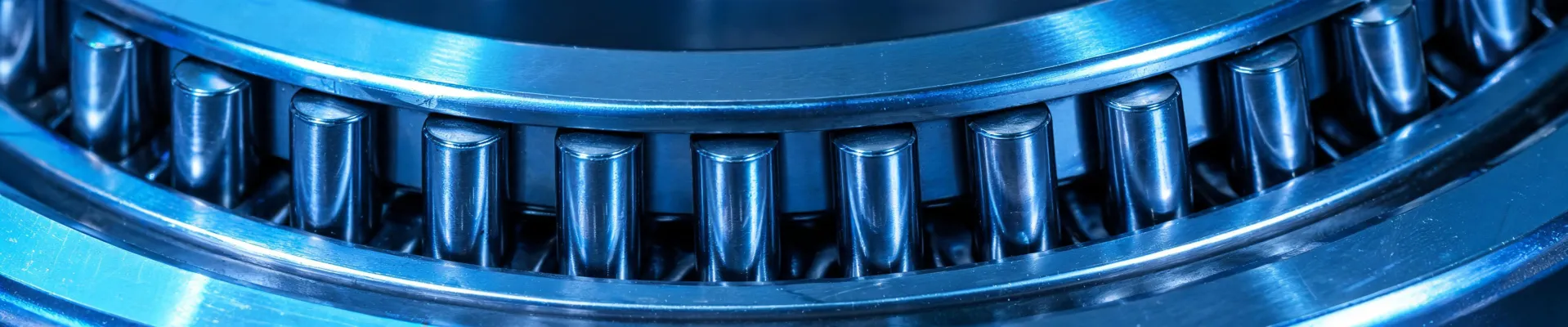
If you're looking at the INA bearings website for the first time, or even if you've been ordering parts for a while, figuring out exactly which bearing you need can be a headache. There's no universal 'best' bearing. The right choice depends entirely on your specific setup: the load, the speed, the precision required, and the space you have to work with.
I manage purchasing for a mid-size manufacturing facility—we've got about 400 employees across three locations. I've been placing orders for transmission components, including all sorts of INA bearings, for about 5 years now. One thing I've learned is that a bearing that works perfectly in one machine can fail prematurely in another. So, let's break it down by the most common scenarios I've run into.
Your Situation Determines Your Best Option
To simplify, I've found that most bearing selection problems fall into three categories. Before you click 'add to cart', figure out which scenario fits you:
- Scenario A: High-Speed, High-Precision Applications (Think spindles, machine tools)
- Scenario B: Heavy Load, Low-Speed Applications (Think conveyor systems, gearboxes)
- Scenario C: Linear Motion & Positioning (Think CNC guides, automation slides)
A colleague of mine once ordered a standard deep groove ball bearing for a high-speed spindle because he was in a rush. It lasted maybe three months. That was a costly lesson in matching the bearing type to the actual operating conditions. So, let's look at what actually works for each case.
Scenario A: When Speed and Precision are Everything
If your machine needs to run at high RPMs with minimal runout, you're in this camp. High-speed spindles, for instance. In these cases, the primary concern isn't just load capacity—it's maintaining accuracy at speed. Heat generation from friction is a huge enemy.
For this, I usually look at precision cylindrical roller bearings or angular contact ball bearings. INA has a great selection of these. The key is to look for bearings with a 'light' cage design (often polyamide or brass), which reduces mass and allows for higher speeds. The standard SKU codes for these often feature an 'HC' or 'C' suffix, indicating a higher precision class.
What I'd recommend from the INA portfolio: For a standard high-speed spindle, a series like the INA HS719 or HS70 angular contact ball bearings are a go-to. They're designed for exactly this.
But here's the catch: if your load is predominantly axial (pushing along the shaft), you might need a dedicated thrust bearing. In a high-speed scenario, look for a ball thrust bearing with a machined pocket cage, not a pressed steel one. The INA 513 series is a solid, reliable choice, but make sure it's rated for your specific speed.
Scenario B: When the Load is Heavy and Slow
This is for things like heavy roller presses, large gearboxes, or conveyor drives. The metric here is brute strength and durability, not frictional finesse. You're moving a lot of weight, but not quickly.
This is where roller bearings—specifically, spherical roller bearings or needle roller bearings—shine. They have a higher load capacity for their size compared to ball bearings. INA is renowned for its needle roller bearings—their 'RNA' and 'NA' series are industry standards.
An unconventional piece of advice: A lot of people think 'heavy load' means 'big and expensive.' Sometimes, a compact, full-complement needle roller bearing (without a cage) can carry a much higher load in a smaller space than a larger, caged roller bearing. I've had engineers insist on a big cylindrical roller bearing when a compact, caged needle roller bearing from INA would have done the job for half the cost and took up less space.
For pure axial loads in this scenario, a cylindrical roller thrust bearing is your friend. INA's 812 series is a workhorse. They handle heavy, constant thrust loads very well. The key is ensuring proper lubrication—these bearings need a continuous oil supply in many high-duty applications, something that's easy to overlook on a spec sheet.
Scenario C: Linear Motion and Precision Positioning
This covers your automated pick-and-place arms, measuring machines, and CNC axes. The keywords are precision and low friction. You need stiffness and accuracy, often in a compact package.
For linear motion, you have two classic options: linear ball bearings (bushings) or linear guide rails. INA makes both. For high-precision, the linear guide rails (like the RUE series) are superior—they're preloaded to eliminate play. For a simpler, less expensive system for lower loads, linear ball bearings (like KB series) work fine.
And what about a Rockford ball screw? That's a common example. If you're designing a system with a Rockford ball screw, you need to pair it with angular contact thrust bearings to handle the axial load. The INA ZKLF series of double row axial angular contact ball bearings are exactly what you need for supporting the fixed end of a ball screw. They handle high axial forces with precision and can also take some radial load.
How Ball Bearings Are Made: A Quick Peek Behind the Scenes
People often ask me about how ball bearings are made. It's a good question because it helps explain why some cost more. It's not just about the steel. The process involves several critical steps:
- Forming: The balls are cold-forged from wire rod into a rough sphere. The rings are forged or machined from tube stock.
- Heat Treatment: This is crucial. The parts are hardened and tempered to a specific hardness (typically around 60-64 HRC for standard bearings). This gives them their fatigue resistance.
- Grinding: The raceways on the rings and the balls are precision ground. This is where the tolerances come from. A high-precision bearing (like P4 or P2) will have tighter tolerances than a standard P0 grade.
- Lapping & Superfinishing: The final step is a honing process that creates the incredibly smooth surface finish needed for low friction and long life. This is a subtle but major differentiator between a budget bearing and a premium one like an INA.
How to Know Which Scenario is Yours
Here's a simple checklist I use. Be honest with yourself about your operating conditions:
- Environment: Is your machine in a clean, temperature-controlled shop, or a dusty, wet environment? (Dusty/dirty = heavy seals, possibly shielded bearings).
- Rotation Speed (RPM): High (>5000 RPM) or Low (<1000 RPM)? (High speed usually means lighter cages, precision, and oil lubrication).
- Load Type: Is the majority of the load radial (pushing down on the shaft) or axial (pushing along the shaft)? (Radial = roller/ball; Axial = thrust bearing).
- Lubrication: Can you supply continuous oil, or do you need a grease-packed, sealed-for-life bearing? (Oil is for high speed/heat; grease is for simplicity and lower speeds).
- Precision (Runout): Does your application need super-accurate rotation (P4, P2 class), or is standard (P0) fine? (Motors usually P0; Spindles need P4+).
- Life Expectancy: Look at the L10 life rating in the catalog. This tells you the number of hours (or revolutions) that 90% of a group of bearings will survive or exceed. It's not a guarantee, but it's the best industry standard.
I should add that the biggest mistake I see people make is over-specifying a bearing. They buy a high-precision, high-speed bearing when a standard one would do the job for a fraction of the cost. Conversely, under-specifying leads to failure and downtime. Knowing what you don't need is just as important as knowing what you do need. Sometimes, the most honest advice is to recommend a simpler, cheaper bearing because it's a better fit for the job.

Elena Markovic
Elena Markovic is an independent industrial motor and drive systems analyst covering induction motors, servo motors, stepper motors, and variable-frequency drives. She examines IEC 60034-30-1 efficiency classes, IEC 61800-9-2 drive-system losses, speed-torque curves, duty cycles, thermal limits, and feedback compatibility across operating envelopes. Her evidence-led guides help OEM engineers and plant teams select efficient motion packages, plan integration, and reduce commissioning risk.