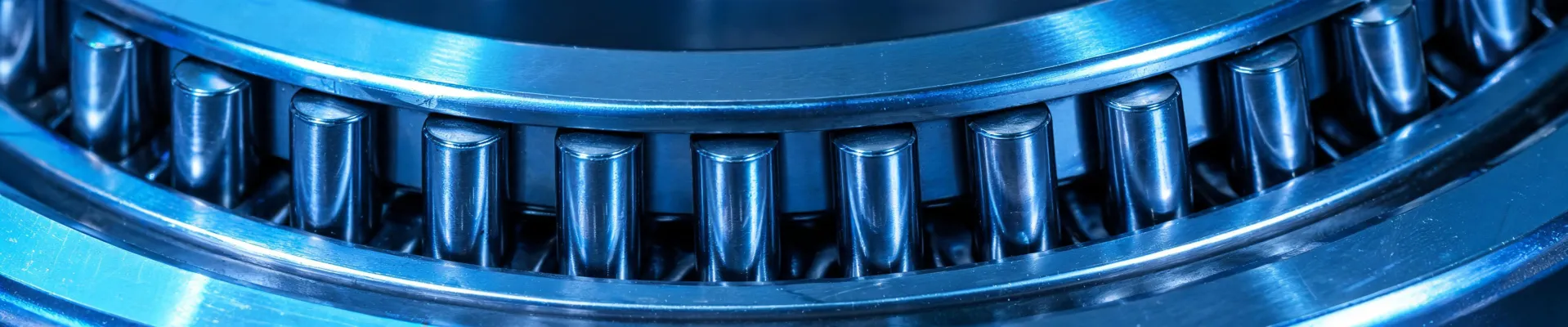
A ball bearing is a rolling-element bearing that uses hardened steel balls between an inner ring and an outer ring to reduce rotating friction and carry radial and axial loads. If you need one in a hurry, the fastest and most reliable move is usually to order a standard INA deep-groove ball bearing from an authorized distributor and confirm the exact part number on the INA bearings website before placing the rush order.
In my role coordinating emergency replacements for an industrial bearing distributor, I've processed more than 200 expedited orders in the past six years. Last March, a food-processing plant called at 3 p.m. with a conveyor down. The machine used a standard INA 6205-2RSR deep-groove ball bearing. Normal lead time was four days; we had it on a truck by 7 p.m. and the line was running the next morning. The fix wasn't a faster courier. It was knowing precisely which bearing was under the housing—because the customer had originally been sold a “similar” ball bearing with a different seal.
What's a Ball Bearing?
If you're not coming from maintenance or engineering, the short version is that a ball bearing is the part that lets a shaft spin with less friction. It has four basic pieces: the inner ring, outer ring, balls, and a cage that keeps the balls evenly spaced. The balls are the “rolling elements” that convert sliding friction into rolling friction. That's the whole trick.
Ball bearings are good for high-speed rotation, moderate radial loads, and relatively low starting friction. They're the default choice for electric motors, pumps, conveyors, fans, and a ton of industrial equipment. Rating life for ball bearings is calculated using ISO 281, where L10 = (C/P)^3. I'm not going to pretend I do that by hand — I use the catalog. But it's worth understanding because a slightly different part number can have a way shorter life than the original.
Spherical Bearing: When a Ball Bearing Won't Save You
A spherical bearing does a different job. It's designed to allow angular misalignment between the shaft and the housing. The inner ring has a spherical outer surface and the outer ring has a matching concave inner surface, so the bearing can rotate around a center point and accept oscillating movements. That's why you'll find spherical bearings in equipment with shaft deflection, mounting-bore misalignment, or changing angles — things like pivot points, hydraulic cylinders, and heavy-duty linkages.
Quick clarification: “spherical bearing” can mean two different product families. There are spherical plain bearings, which use a sliding contact and are made for slow, oscillating movements. And there are spherical roller bearings, which use rolling elements and handle both heavy radial loads and misalignment. If you're looking on the INA bearings website, each family has different part-number prefixes, so check before you buy.
One counterintuitive thing I've learned: many rush orders aren't caused by worn-out bearings. They're caused by someone ordering the right part number but the wrong series. A 6205 is not a 5205. A GE40 is not a GE40-LO. The letters after the base number are not decoration — they tell you about clearance, seals, and raceway material.
How to Choose Under Pressure
When there's a machine down, your brain wants to pick any bearing that looks close enough. Resist that.
First, get the old bearing's part number off the face or housing. If it's worn away, measure: bore, outside diameter, width, and seal type. Second, cross-reference that on the INA bearings website or call a distributor with a spec sheet. Third, decide what you actually can wait for. Standard series like 62xx and 63xx are commonly stocked. If the number has a suffix that means special steel, special clearance, or a non-standard size, it may not be on a shelf anywhere. In that case, “rush” needs a different plan — like having an application engineer review the substitution before you spend money on overnight shipping.
I have mixed feelings about rush fees. On one hand, they feel like a penalty on top of a problem. On the other hand, I've seen the chaos that expedited orders create in a warehouse, so I understand why distributors charge them. The useful trick isn't to avoid rush fees; it's to avoid the reorder. A lot of expediting is unnecessary if you spend twenty minutes on the INA bearings website verifying the spec and the cross-reference.
Ball Bearing vs Spherical Bearing: A Simple Honest Split
- Use a ball bearing when the shaft is relatively aligned, speeds are moderate to high, and friction or noise matters.
- Use a spherical roller bearing when you need high radial load capacity and misalignment tolerance.
- Use a spherical plain bearing when the movement is oscillating or angular, not continuous high-speed rotation.
That split covers most decisions. But it doesn't cover everything. There are edge cases involving extreme temperatures, chemical exposure, and high axial loads. I'm not an applications engineer, so I can't speak to the full finite-element analysis side. What I can tell you from a procurement perspective is this: if the exact INA part number isn't in stock, the next best step is to ask a Schaeffler application engineer, not to guess based on a similar-looking bearing.
Wait, What About Roller Chains?
This is a bit outside my lane. A roller chain is a power-transmission component, not a bearing family. I do not claim to be a chain specialist, but I've seen enough failed equipment to know that chain-drive problems get misdiagnosed as bearing problems all the time. If your drive uses roller chains, check sprocket alignment, chain tension, and wear before you replace a bearing that may not be at fault. And if you're actually looking for roller chains, you need a different supplier page than a bearing page (seriously, don't ask the bearing counter to quote chain).
When Not to Rush
Here's the boundary condition that a lot of content skips: expediting only helps when the right part is available and the failure is genuinely time-critical. If you're in the 20% of cases where the bearing type itself is wrong, paying for same-day delivery just gets you the wrong bearing sooner. After three failed “rush” orders with discount vendors in 2023, our company policy changed: we now require a 48-hour buffer on any standard bearing order and a part-number confirmation from the OE cross-reference before we'll process an expedite.
This was accurate as of early 2025. Bearing series numbers don't change often, but stock availability does. Verify current specifications and availability on the official INA bearings website before you build your maintenance schedule around a specific part number.

Elena Markovic
Elena Markovic is an independent industrial motor and drive systems analyst covering induction motors, servo motors, stepper motors, and variable-frequency drives. She examines IEC 60034-30-1 efficiency classes, IEC 61800-9-2 drive-system losses, speed-torque curves, duty cycles, thermal limits, and feedback compatibility across operating envelopes. Her evidence-led guides help OEM engineers and plant teams select efficient motion packages, plan integration, and reduce commissioning risk.