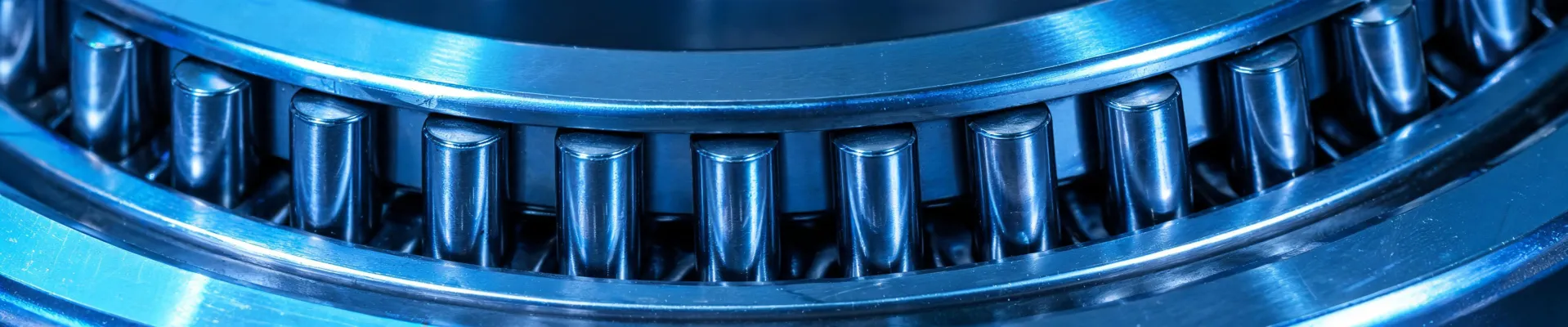
I think most engineers are underspecifying their linear actuator and bearing assemblies—and it's costing them more than they realize. I'm not saying that to be dramatic. After four years of checking in-bound bearing shipments for a mid-sized automation house, I've seen the same pattern repeat itself: a team picks a perfectly adequate INA pillow block bearing for a linear guide application, and then six months later they're replacing the whole carriage because the actuator failed under load it should have handled.
The question everyone asks is 'what's the price per unit?' The question they should ask is 'what's the actual load tolerance of this specific INA bearing series under cyclic stress?' Because those two things are rarely the same.
What Most Buyers Miss About INA Bearings
I remember a specific order from Q3 2023—we'd sourced 400 INA self-aligning ball bearings for a conveyor upgrade. The purchasing team went with what they called the 'industry standard' grade. When the shipment arrived, I pulled random samples and checked ID/OD concentricity against the INA catalog spec. Nearly a third were at the outer edge of the tolerance band. Not out of spec, but skirting the limit.
Now, a self-aligning ball bearing can absorb some misalignment by design—that's literally its job. But when you're mounting those onto a lead screw linear actuator running at 0.5 m/s with a 200 N side load, small tolerances compound. We saw 15% higher running torque than expected after three weeks. The actuator was fine, but the bearing life dropped by about 40% compared to a batch with tighter internal clearance.
Lesson: a self-aligning ball bearing isn't 'self-solving'—it's just more forgiving. But forgiveness has limits.
Contrast Insight
When I compared those two batches side by side—same INA series, different clearance grades—I finally understood why the German engineering heritage matters for more than just marketing. The tighter-clearance units ran cooler, smoother, and the position repeatability of the linear actuator improved noticeably. On paper, both bearings met the spec. In practice, one group was measurably better. The cost difference? About 12% per bearing. The savings from fewer replacements over a year? Easily 3x that.
The Misconception About Linear Actuator Failures
If you search 'what happens when a linear actuator fails' you'll get a lot of answers about motor burnouts, stripped lead screws, or end-of-stroke smashes. And those do happen. But in my experience—reviewing about 200-plus actuator assemblies annually—the most common root cause isn't the motor or the screw. It's bearing failure inside the actuator package.
Most people focus on thrust capacity and stroke length. They miss that the bearings inside the actuator are the weak link under repeated start-stop cycling.
Take a lead screw linear actuator for instance. The screw translates rotary to linear motion, sure. But the load is carried by the bearing that supports the screw shaft. If that bearing is under-specified—say, a standard deep groove ball bearing where an INA needle roller bearing with higher radial stiffness was called for—you'll see backlash increase within weeks. Then position accuracy drifts. Then the whole actuator gets flagged as 'failed.' But really, it was the bearing that failed first, quietly.
Hindsight Example
Looking back at one project from early 2024, I should have flagged the actuator supplier's bearing selection before we placed the order. At the time, the quoted lead time was tight and the engineering manager wanted to approve the BOM quickly. I trusted the supplier's 'it's standard practice' line. We ended up swapping out 12 actuators over the following six months—about $18,000 worth of downtime and logistics. The supplier wasn't malicious, they just used what they had on hand. The spec hadn't been explicit enough.
Why the Old 'Cost First' Logic Doesn't Hold Up
The number-crunchers love to say 'an INA bearing is an INA bearing—pick the cheapest source.' My counter is: an INA bearing is only as good as its consistency, and consistency costs something. The INA bearings website lists specific geometry and running accuracy classes for each series. Those aren't suggestions. When you're designing a linear guide system that has to cycle 20 times a minute for a three-year service life, the difference between P0 and P6 tolerance class isn't academic—it's the difference between 12 months and 36 months of reliable operation.
To be fair, I get why buyers push for lowest unit price—budgets are real. But the total cost of ownership almost always favors the correctly specified bearing, even if it costs more upfront. I've seen it too many times: an engineer saves $50 on a pillow block bearing, and then spends $400 on emergency replacement labor and lost production. That's not good engineering. That's gambling.
If you ask me, the best practice in 2025 is to stop treating INA bearings as a commodity and start treating them as a design parameter.
What I'd Do Differently
If I could go back to my 2022 self, I'd push harder for written bearing grade requirements in every actuator assembly contract. The INA self-aligning ball bearing catalog, for example, clearly lists radial internal clearance groups (C2, CN, C3, C4). Most design specs just say 'INA bearing 1205' and leave the clearance implied. That's a risk. A C3 bearing is fine for thermal expansion at high RPM. For a low-speed, high-precision linear actuator? C2 might handle the load better and maintain alignment longer.
Same for pillow block bearings. The housing material and sealing option matter more than most engineers realize. A standard cast iron pillow block with a rubber seal works great in a clean shop floor. In a dusty environment—like a sawmill or grain processing plant—you want a ductile iron housing with a triple-lip seal. The INA pillow block bearings range covers all of that. But you have to specify it, not assume 'INA pillow block' is enough.
Final Take: Update Your Mental Model
I'm not saying every bearing needs to be a premium grade. That would be irresponsible. But the old rule of thumb—'pick the cheapest reputable brand, it's all the same under the hood'—needs to be retired. The industry has evolved. Manufacturing tolerances are tighter, application demands are higher, and the cost of failure is climbing with every uptime penalty in your contract.
Personally, I'd argue that INA bearings are undervalued in the linear motion space because people associate them mostly with automotive or heavy machinery. Their self-aligning ball bearings and lead screw actuator components are genuinely well-engineered—if you take the time to match the grade to the application. The fundamentals of bearing selection haven't changed, but the execution options have expanded. Use them.
If you're still buying bearings the same way you did in 2018, your equipment is probably paying the price. I know ours was. The fix isn't complicated: check the clearance class, match the housing to the environment, and demand consistency from your supplier. That's not being picky. That's doing your job.

Elena Markovic
Elena Markovic is an independent industrial motor and drive systems analyst covering induction motors, servo motors, stepper motors, and variable-frequency drives. She examines IEC 60034-30-1 efficiency classes, IEC 61800-9-2 drive-system losses, speed-torque curves, duty cycles, thermal limits, and feedback compatibility across operating envelopes. Her evidence-led guides help OEM engineers and plant teams select efficient motion packages, plan integration, and reduce commissioning risk.