The morning our line went down
June 2023. Thursday. 6:47 a.m.
The packaging line stopped mid-cycle with a sound I still remember — a grinding whine, like someone dragging fingernails across a chalkboard, but louder and metallic. You know the one.
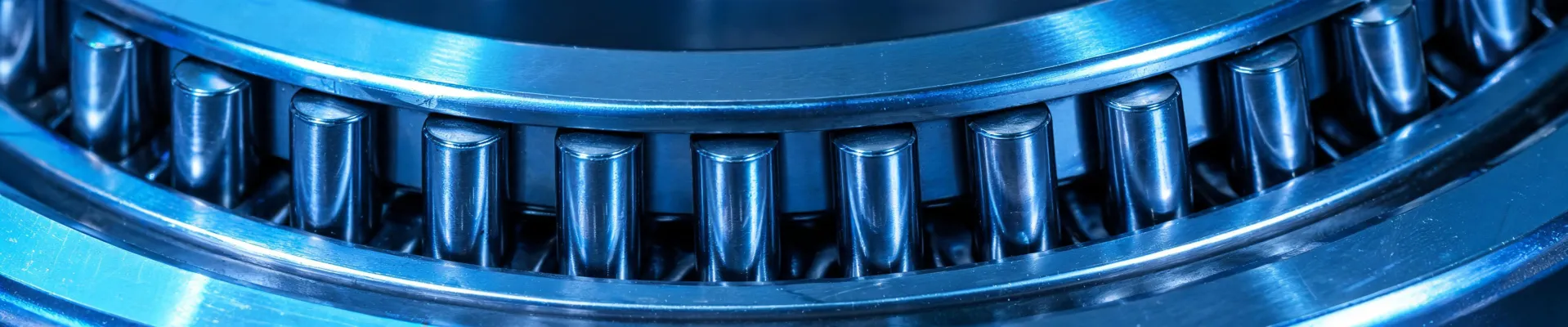
The linear actuator on our carton-folding station had failed. An INA linear roller bearing inside the actuator had gone out. I recognized the part instantly. Id' been handling our INA bearing orders for nearly eight years at that point.
So I jumped in and did what I thought was the right thing.
Spoiler: it wasn't.
The problem wasn't just the ball bearing
After we pulled the actuator, the picture got worse. The failed bearing had damaged the rail surface and compromised the actuator's seal. The rollers had scattered. It wasn't a quick bearing swap anymore — it was an entire linear rail assembly that needed replacing.
From the outside, replacing a bearing looks like swapping a part. The reality is that the failure had already cascaded into the rail, the seal, and the mounting interface.
But here's the thing. We're maintainers, not detectives. So I did what any seasoned buyer would do — I pulled up the INA bearings catalog and started looking for the part number.
Found it.
At least I thought I did.
Two mistakes I made
Mistake #1: I assumed size = spec
I ordered the replacement by matching the original model number. It shipped. It looked right. But I didn't verify the preload class or the tolerance grade — the two things that actually determine how a bearing performs under load and how long it lasts.
In INA's system, ordering the right size does not mean you ordered the right bearing. That's the first real lesson.
The replacement lasted about 40 hours. Honestly, 40 hours was a gift.
Mistake #2: I didn't read the catalog properly
INA linear roller bearings are listed as a separate section in the catalog for a reason. They're not interchangeable with ball bearings, and they're not interchangeable across preload classes either.
I treated "same dimensions" as "same part." Didn't verify preload. Didn't check tolerance. Didn't even look at the spec sheet I had right in front of me.
So when the second bearing failed, I wasn't surprised. What surprised me was how close it came to taking the entire linear guide with it.
The turning point
I pulled in our senior tech after the second failure. He asked one question I couldn't answer:
"What preload class was on the original order?"
I stared at him for about ten seconds. Then I realized our order history — for INA roller bearings, linear actuators, mounted linear bearings, all of it — listed part numbers and dates. No specs. No preload class. No tolerance grade.
We'd been ordering on model number and gut feel. That's not maintenance. That's gambling.
What it cost
We replaced the assembly. Parts, labor, and 48 hours of downtime put us at roughly $2,400.
And that figure quietly ignores the rail surface damage we caught secondary inspection three weeks later.
$2,400 for one wrong assumption.
Painful. But it stuck.
The checklist I use now
After that, I built a one-pager for our team. Every bearing or linear actuator order goes through it:
- Record original specs, not just part numbers. Preload class, tolerance grade, brand. Write it down. Don't rely on "same as last time."
- Separate bearing categories. INA linear roller bearings are not the same as INA ball bearings. The catalog lists them separately because they're used differently. Don't confuse them.
- Check the catalog, not your memory. The INA bearings catalog shows preload and tolerance ratings for a reason. Use them. Don't order on part number alone.
- Inspect the whole assembly. Any time a linear roller bearing or mounted linear bearing fails, check the rail, the seal, and the mounting interface before assuming it's a one-part fix.
- When in doubt, ask. I'm not a mechanical engineer, and I can't speak to stress loads or dynamic ratings. That's what INA's application engineers and good distributors are for. Use them before you guess.
We've caught 47 potential errors with this checklist over the past 18 months. Some were minor. A few would have been catastrophic.
Honest limits: when this approach is wrong for you
INA bearings are excellent. But sometimes my checklist gets in the way:
- If the machine is down and the part is months out. Any bearing that fits is better than a stopped line. Ship it, run it, then fix the spec later.
- If your application is low-speed, low-load, non-critical. A conveyor tail pulley doesn't need a preload class inspection. Use judgment.
- If you're building spares inventory. Generic ball bearings cover a lot of "I'll need it someday" situations. Not every spare needs INA-level specificity.
The point isn't to make every order complicated. The point is to know which orders are complicated before you click submit.
No bearing is "the best." Only the one that matches the job.
Get that wrong, and you'll pay the $2,400 lesson too. Hopefully only once.
According to the INA bearings catalog (2023 edition, accessed January 2025), linear roller bearings are classified by both preload class and tolerance grade. Ordering by dimensions alone is not sufficient for correct replacement.

Elena Markovic
Elena Markovic is an independent industrial motor and drive systems analyst covering induction motors, servo motors, stepper motors, and variable-frequency drives. She examines IEC 60034-30-1 efficiency classes, IEC 61800-9-2 drive-system losses, speed-torque curves, duty cycles, thermal limits, and feedback compatibility across operating envelopes. Her evidence-led guides help OEM engineers and plant teams select efficient motion packages, plan integration, and reduce commissioning risk.