If you're the person stuck ordering mechanical parts even though your title says administrator or buyer, here's the short version first: Don't order by product names. Order by specification. INA bearing or 24V linear actuator or 35 roller chain sounds specific until a machine stops moving. I've learned that finding a stamped number, checking a catalog, and asking one extra question saves more money than any discount code ever will.
I'm an office administrator at a 180-person manufacturing plant. Since 2020, I've managed maintenance and operations purchasing—roughly $600,000 a year across 25 vendors. I report to both operations and finance. I don't have an engineering degree. I have a spreadsheet, a set of calipers, and a lot of respect for people who can explain a tolerance without sounding like a robot.
This is not engineering advice. It's buyer's advice. My experience is based on normal MRO purchasing for standard industrial equipment. If you're buying for aerospace, medical devices, or another regulated industry, you need qualified engineers and traceable parts. But if you're an office person suddenly asked to order bearings, chain, and motion components, this might help you avoid the same traps I fell into.
INA Bearings and INA Needle Bearings: The Catalog Before Checkout
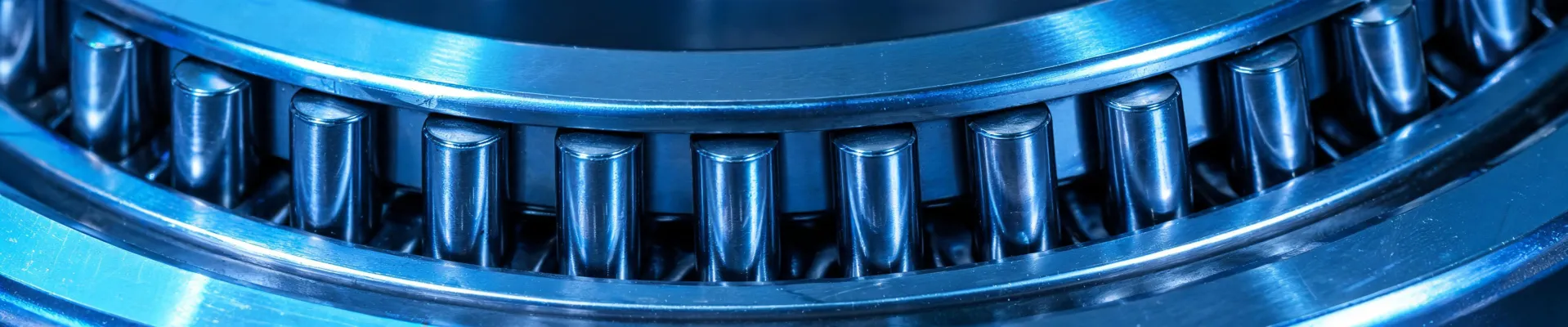
When a maintenance tech says we need an INA bearing, I stop asking what brand they want. I need to know whether they mean a ball bearing, a roller bearing, a thrust bearing, or an INA needle bearing. These are different products. A search engine will happily show prices for all of them. It won't tell you which one belongs on your machine.
The first step is always the existing part number. Look at the outer ring, the cage, or the face of the old bearing. In 2022, I ordered an INA needle bearing based on rough measurements and a photo. It fit the same bore and outer diameter, but I missed a suffix hidden under grime. The dimension was right. The seal design wasn't. I paid return shipping and expedited freight on the correct one.
Now I keep the official INA bearings catalog open before I call anyone. I also ask the maintenance team for the full marking, including prefixes and suffixes. Needle bearing applications are compact, and they can carry heavy loads in a small radial space. But they also depend on the shaft or housing surface being right. A premium bearing will still fail quickly if the mating surface is wrong. That's why I buy by markings and dimensions, not by brand confidence alone.
24V Linear Actuator: Voltage Alone Is Not a Specification
If someone asks for a 24V linear actuator, the obvious answer is 24 volts DC and linear movement. But voltage only tells you what power source it connects to. The rest of the spec includes stroke, force, speed, retracted length, duty cycle, mounting style, limit switches, and sometimes feedback.
In a 2024 conveyor door project, an internal customer told me to order a 24V linear actuator. I confirmed voltage and stroke length. Great. Except when we installed it, the motion was too slow and the unit didn't have the limit switches we needed. The purchase order was correct. The part was wrong. I can't blame the vendor for that one.
Now I ask for more detail before I send a quote request. Duty cycle matters too. Some compact linear actuators are designed for occasional use, not continuous cycling. If someone puts a 10% duty cycle actuator on a machine that runs all shift, it will overheat. That's not a quality problem. It's a specification problem.
35 Roller Chain: It's Lighter Than You Think
When someone asks for 35 roller chain, I confirm they mean ANSI #35: a roller chain with a 3/8-inch pitch. It's common in light conveyors, packaging equipment, lab machines, and other moderate-load drives. It is not the heavy chain used on a main crusher drive. The phrase 35 roller chain describes a family, not a length.
The easiest mistake is ordering chain in feet without knowing how many links you need. Roller chain is assembled from discrete pitches. If you don't know the link count, ask someone to count the old chain or calculate it from the sprocket centers. You also need to know whether you need standard carbon steel, stainless, a connecting link, or an offset link. Multiple strand versions exist too.
My personal rule: if a supplier accepts a vague chain request without asking a single question, I slow down. One extra question about pitch or link count takes twenty seconds. Ordering the wrong chain, paying for return shipping, and waiting another week takes much longer.
What's a Servo Motor? A Straight Answer for Non-Engineers
If you've landed here because you typed what's a servo motor into a search box, this is the simplest explanation I can give: A servo motor is a motor with feedback. Unlike a standard motor that just spins when power is applied, a servo system knows where the motor shaft currently is. A servo drive controls it and corrects small errors automatically. That is why servo motors are used for precise positioning and speed control.
But the definition is only the beginning. Servo motor is not a full part description. You still need the motor's frame size, voltage, feedback type, brake voltage if it has one, connector style, and sometimes the matching drive model. When an old servo motor fails, don't rely on the word servo. Get the nameplate data and record the drive model too.
Small Orders Deserve the Same Professionalism
Some of our MRO orders are small. I understand why some suppliers don't want to spend an hour on a $50 order. That's a real business constraint. But I still expect a proper invoice, a clear part number, and a straight answer to a technical question.
When I took over purchasing, the vendors who treated our smaller orders seriously were the ones who got the bigger orders later. That isn't just loyalty. They learned our equipment and knew what we needed. The supplier who dismisses a small customer because of volume today may not realize that today's $30 chain order belongs to a plant that will need $5,000 in spares next month.
If you're a smaller customer, look for suppliers who ask questions. The ones who ask for the bearing suffix or the actuator duty cycle are not being difficult. They're doing their job.
Honest Limitations
I still make mistakes. The advice above comes from my experience with hundreds of standard MRO orders in a mid-sized industrial plant. If you're in a regulated industry, a safety-critical application, or a specialized engineering project, please use licensed engineers and certified suppliers.
My real lesson is simpler than any product category. When I stopped treating a request as just an INA bearing and started treating it as the exact INA bearing that the machine originally used, everything got easier. A little curiosity on the front end saves a lot of panic on the back end.

Elena Markovic
Elena Markovic is an independent industrial motor and drive systems analyst covering induction motors, servo motors, stepper motors, and variable-frequency drives. She examines IEC 60034-30-1 efficiency classes, IEC 61800-9-2 drive-system losses, speed-torque curves, duty cycles, thermal limits, and feedback compatibility across operating envelopes. Her evidence-led guides help OEM engineers and plant teams select efficient motion packages, plan integration, and reduce commissioning risk.