Here's my mildly unpopular opinion after years of ordering components: 'Which is better, a ball bearing or a roller bearing?' is not a real question until you know what the machine is doing. I say this as the person who actually processes bearing orders, not as an engineer.
I'm the office administrator for a custom automation company of about 110 people. I manage MRO and motion component purchasing, roughly 80 orders a year across 11 or 12 vendors, and I report to operations and finance. I've learned enough about INA bearings, INA pillow block bearings, linear ball bearings, and linear guides to be dangerous, but I've also learned where my knowledge stops.
That boundary is the point. If you search for INA bearings or ask 'which is better ball bearing or roller bearing' on a forum, you'll get comparison charts. I used to love those charts. Now I use them as a starting point, not an answer.
Which is better: ball bearing or roller bearing?
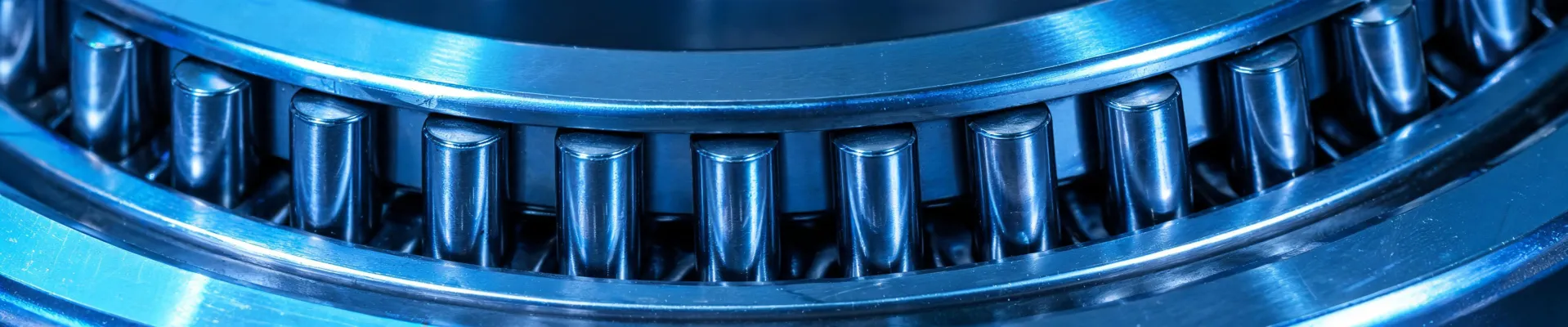
In simple terms, ball bearings carry loads through point contact, so they're usually a better match for higher speeds and lighter loads. Roller bearings, including cylindrical, tapered, spherical, and needle types, carry loads through line contact, so they're usually a better match for heavier radial loads and shock. That's the thumbnail I use when explaining purchasing decisions to new office staff. Don't hold me to engineering precision beyond that.
But the thumbnail does not tell you which bearing to buy. A deep groove ball bearing in the wrong size can fail faster than a needle roller bearing that fits the available space. A spherical roller bearing can handle misalignment better than some ball designs. A cylindrical roller bearing tolerates speed well but needs good shaft alignment. Every choice trades off something. The word 'better' only makes sense after you know load direction, speed, duty cycle, shaft stiffness, mounting, and lubrication.
That's not me being defensive. I don't have hard data on every bearing failure across our industry, and I wish I had tracked maintenance causes more carefully. What I can say anecdotally is this: the wrong rolling element usually fails after a few months, while the right one can outlive the machine. If you choose first and ask questions later, you don't notice until you're waiting for the courier.
What an 'upgrade' taught me about boundaries
I still kick myself over a 2022 bearing order. Maintenance reported a rough-running INA pillow block bearing on an indexing conveyor. A vendor suggested the next load class, and the price difference was only about 12 percent. It sounded like an upgrade, not a redesign.
The 'stronger' bearing did not have the same mounting height. The centerline of the shaft would have moved, which meant reworking the bracket. I caught it before the weekend install, but only because our mechanical designer checked the drawing. Between the rush courier and the extra machine time, that decision cost more than the original problem would have cost, and I had to explain the overrun to finance.
The part itself wasn't bad. I was too quick to accept a generic answer because I wanted to solve a problem without sending an engineering question. What I should have done was ask for a ruling from someone with technical responsibility for the application.
That experience changed how I read 'premium' or 'heavy duty' in catalogs. Better is not an attribute; it is a fit. The same is true for an INA pillow block bearing: a higher rated unit can be a poor fit if the envelope changes or the bolt pattern moves.
The same lesson shows up with linear servo motors
Earlier this year, we looked at replacing pneumatic actuators with a linear servo motor. The mechanical engineers did the math, but when I asked suppliers for guidance, one response was 'linear servo motors are better than pneumatics.' That's not useful. A linear servo motor is a force source, not a complete motion system. It needs guidance, feedback, and a tuned control loop. If the guide is undersized, the linear motor's performance does not matter.
The same conversation happens with linear ball bearings. A linear ball bearing is a simple, compact way to support a shaft moving in a straight line. It can be an excellent choice when loads are steady and the support structure is stiff. But when the load is offset or there is a high moment, a linear ball bearing might be the wrong answer, even if it has twice the rated load on paper. You need the actual geometry before you compare.
I asked one applications engineer why she did not just recommend a bigger linear ball bearing. She said she would need the load offset and moment first. Then she said, 'if the moment is high, I'd probably use a profiled rail guide or a roller guide instead.' I trusted that answer because she was clear about what she could confirm and what she still needed to check.
What I ask now before ordering bearings
My job is not to design the machine. My job is to make sure the part fits, is available, and is traceable for the next order. But I've realized asking smarter questions protects our internal customers and keeps the maintenance history clean. Here is the list I keep next to my desk:
- What load does the bearing actually see, including shock loads?
- What speed range and duty cycle are expected?
- What are the mounting center heights, shaft size, and envelope dimensions?
- Can the applications engineer confirm a written part number from the INA catalog or Schaeffler's published technical data?
- What exactly failed on the original bearing? A noise or vibration diagnosis changes the specification more than any comparison chart.
Those questions sound basic until a vendor says 'we can match the part number.' A match has to be a real part number from a manufactured catalog, not a guess from a chart. I'd rather wait one day for an applications engineer to confirm than order the wrong bearing twice.
Yes, 'it depends' is boring. That's fine.
I know that someone will read this and say it is a long way of saying it depends. Fair enough. But there is a difference between refusing to choose and refusing to oversimplify. 'It depends' only helps when you can name exactly what it depends on. That requires experience, honesty, and a healthy respect for professional boundaries.
In my office, the most trustworthy supplier is not the one who says all bearings are pretty much the same. It's the one who says, 'I can sell you this bearing, but if it's going into a high-moment linear servo axis, I want an applications engineer to confirm it.' That kind of answer does not make the supplier seem weak. It makes them easier to justify to finance, operations, and the engineer waiting on the line.
So if you ask me which is better, ball bearing or roller bearing, I'll probably ask a question of my own. What is it doing, and have you asked for technical help yet? From what I've learned buying INA bearings and other motion parts, that follow-up question is worth more than any comparison chart.

Elena Markovic
Elena Markovic is an independent industrial motor and drive systems analyst covering induction motors, servo motors, stepper motors, and variable-frequency drives. She examines IEC 60034-30-1 efficiency classes, IEC 61800-9-2 drive-system losses, speed-torque curves, duty cycles, thermal limits, and feedback compatibility across operating envelopes. Her evidence-led guides help OEM engineers and plant teams select efficient motion packages, plan integration, and reduce commissioning risk.