-
A 30-Second Look at How a Ball Bearing Is Made
-
Scenario A: Misalignment Is the Symptom → Reach for Spherical Bearings
-
Scenario B: Axial Loads, INA Thrust Bearings, and the Ball Screw Repair Question
-
Scenario C: Long Travel, High Speed, and High Stiffness → INA Linear Roller Bearings
-
How to Know Which Scenario You're In
There's a question that hits our maintenance inbox every week, and I understand why people want a single answer: 'Which INA bearing should I use?' Or, 'Can we do a ball screw repair instead of replacing it?' I spent years looking for a universal answer. I stopped after a string of expensive mistakes.
Here's the short version of who I am: I've been maintaining production equipment for eight years. I've personally made and documented 14 significant mistakes, totaling roughly $38k in wasted budget. Now I maintain our team's checklist. The mistake that hurt most was a reground ball screw in 2017.
In 2017, I approved a reground ball screw for a CNC lathe because the repair quote was 40% below a replacement. Every spreadsheet analysis pointed to repair. My gut said something was off about the vendor's refusal to include a measurement report. I went with the spreadsheet. The screw came back with acceptable-looking backlash, but it lost positioning accuracy in 11 months. I still kick myself for not checking the actual pitch error on a calibrated bench. That failure taught me a lesson I've now documented thirteen more times: the right bearing or screw decision depends on the scenario, not on a price sheet.
So let's sort the scenarios. In my world, the three most common decisions are: misalignment problems that call for spherical bearings, axial-load and lead-screw problems that lead to INA thrust bearings or a ball screw repair, and long-travel stiffness problems where INA linear roller bearings beat the alternatives. Which one is yours?
A 30-Second Look at How a Ball Bearing Is Made
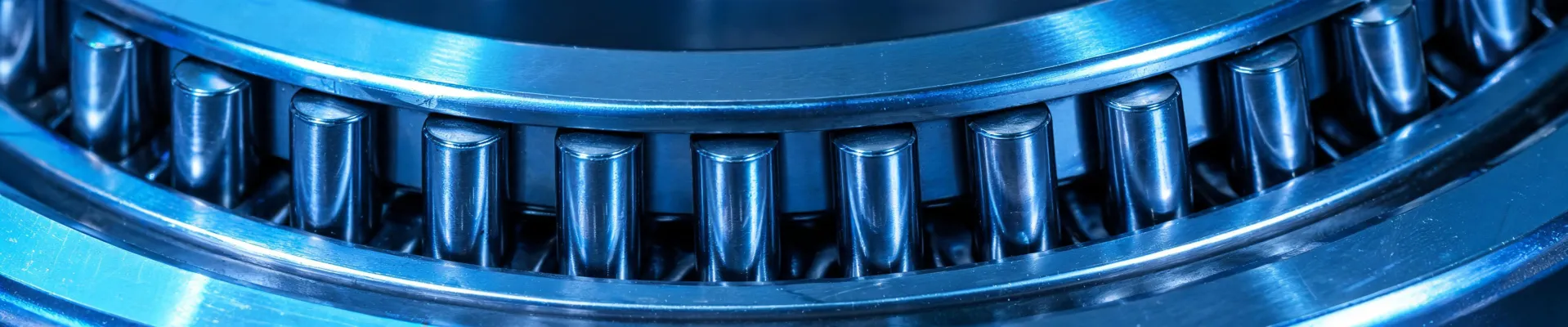
Before jumping into scenarios, let's ground ourselves in what a bearing is. The short version of how a ball bearing is made, and why it matters, is this: the rings are cut, turned, hardened, and ground; then the raceways are honed. The balls are made separately, cold-headed from wire, then ground and lapped until they're spherical within millionths of an inch. The surfaces and clearances are controlled to tolerance classes defined by standards like ISO 492 and ABMA 20.
Why should a maintenance engineer care? Because a bearing that fits the shaft but has the wrong internal clearance or accuracy class will carry load unevenly, run hot, or wear out months early. I've seen a $60 bearing take down a $40,000 axis. The part number was right. The tolerance class was wrong. At least, that's been my experience in machine tools—your application may be different.
Scenario A: Misalignment Is the Symptom → Reach for Spherical Bearings
Your machine is binding, and the diagnosis says misalignment. Maybe the bearing is being asked to accommodate a housing that isn't perfectly square, or a linkage that oscillates while the load changes direction. Forcing a rigid radial bearing to do this is like holding a flashlight with a bent wrist—it works for a while, then it hurts.
This is where spherical bearings come in. A spherical plain bearing lets the inner ring tilt relative to the outer ring within a designed angle. It is built for oscillation and angular misalignment. I once specified a standard cylindrical roller bearing on a linkage that needed to pivot a few degrees under load. It seized within a week. The fix was an INA spherical plain bearing—roughly double the part cost, but it saved a week of downtime and a scrapped shaft.
The INA range covers radial and angular contact spherical plain bearings, so you can match the clearance and load rating to your kinematics. If the machine is binding, ask first: is this bearing being called on to align something? If yes, use a spherical bearing instead of forcing a rigid one.
Scenario B: Axial Loads, INA Thrust Bearings, and the Ball Screw Repair Question
Scenario B: the load is predominantly axial, or the ball screw is starting to show backlash. These two problems often travel together.
Let's talk about the ball screw repair question first. Repair sounds like the responsible financial choice. In low-cycle, lower-accuracy applications, repairing a ball screw can save 30 to 50 percent and work perfectly for years. I have mixed feelings about it because I've seen the other side. In high-precision machining, a reground screw rarely comes back with the original lead accuracy and preload. The question isn't 'Can it be fixed?' It's 'Will it still meet the original accuracy class after a few thousand cycles?' If you can't answer yes from a measured report, replacement is often the lower-total-cost decision.
I want to say we paid $1,450 for that regrind in 2017, but don't quote me on the exact number—the lesson wasn't the invoice, it was the 11-month lifespan. Oh, and if a reground screw vendor can't provide a measurement report, don't buy it no matter the discount.
While you're inspecting the screw, look at the fixed-end bearing. If the original unit is a deep-groove ball bearing trying to handle the screw's thrust load, that's part of the problem. INA thrust bearings—especially axial angular contact ball bearings and cylindrical roller thrust bearings—take sustained axial loads in a compact envelope. They have raceway geometry made for thrust, not a radial bearing pressed into secondary duty.
If you're rebuilding a ballscrew assembly, compare the dynamic load rating of the proposed bearing against the actual axial force. Use the manufacturer's load tables, or ISO 3408-5 for ball screw ratings and ISO 281 for bearing life. A bearing that looks right but is undersized will fail quietly and take the new screw with it. I've made that mistake; the rework cost more than the original replacement.
My rule now: if two suppliers quote 20 percent apart, the lower quote wins only when I can verify the engineering. The hidden cost of a failed repair is always higher than the visible saving.
Scenario C: Long Travel, High Speed, and High Stiffness → INA Linear Roller Bearings
Scenario C: you need long travel, high speed, and high stiffness under a cantilevered load. This is the classic gantry or pick-and-place axis. Many machines use profile rail guides with balls, and they are fine for many jobs. But when the load is heavy, or the moment load is high, a ball-type guide may not give you the rigidity you need.
That's why INA linear roller bearings are a distinct category. They use cylindrical rollers, which means a much larger contact area between the rolling element and the raceway. The result is higher load capacity and less deflection at the same overall size. I learned this on a gantry retrofit in 2021. I specified a ball-profile rail because the static load figure said it was enough. My gut said the cantilevered spindle would chatter. The machine tuned badly under heavy cuts, and we replaced the rail within 14 months. The INA linear roller bearings we installed next have held the same cycle for three years.
That's not a criticism of ball guides. If your axis is lightly loaded and speed is the priority, a linear ball bearing is often the right choice. Roller bearings excel when stiffness and load capacity are the gating factors. Match the guide type to the real limiting constraint.
How to Know Which Scenario You're In
Don't start by reading spec sheets. Start by asking three questions.
- What direction is the dominant load? Axial? Look at INA thrust bearings and check the ball screw. Radial? A radial bearing is usually fine. Moment or tipping load? Look at INA linear roller bearings or a larger guide.
- Is misalignment part of the operating condition? If the bearing has to allow pivoting or tilt, use spherical bearings. If misalignment is an installation error, fix the structure instead of blaming the bearing.
- What is the total cost of a wrong decision? Don't compare purchase price. Compare purchase price plus installation labor plus downtime plus the probability of a repeat failure. That's how 'cheap' becomes expensive.
There is no universal winner. There is only the right answer for your load, your environment, and your tolerance for downtime. The closest thing to a universal rule I have is this: when in doubt, choose the option that gives you measurable evidence—a bearing load calculation, a ballscrew test report, or a documented tolerance class. If the supplier can't give you evidence, they're giving you price. And price is not the same as value.

Elena Markovic
Elena Markovic is an independent industrial motor and drive systems analyst covering induction motors, servo motors, stepper motors, and variable-frequency drives. She examines IEC 60034-30-1 efficiency classes, IEC 61800-9-2 drive-system losses, speed-torque curves, duty cycles, thermal limits, and feedback compatibility across operating envelopes. Her evidence-led guides help OEM engineers and plant teams select efficient motion packages, plan integration, and reduce commissioning risk.