It was 2:47 PM on a Friday in March 2024. I was packing up to leave for a dentist appointment when my phone rang. The caller ID showed a plant name I knew—an automotive stamping facility about ninety minutes from our warehouse. The maintenance manager on the other end, let's call him Dan, skipped the small talk.
"Line three is down. The conveyor pulley assembly just seized. We need a replacement bearing."
Simple request. It turned out to be anything but.
I've coordinated emergency parts orders for eight years now. Over 200 rush jobs—maybe 230, I'd have to check our system. This one stuck with me because it exposed a chain of bad decisions that started years earlier with a twelve-dollar "savings."
It Wasn't a Standard Ball Bearing
Dan told me it was a standard ball bearing that failed. When I asked for the part number, he paused.
"We've been using generic replacements," he said. "The previous maintenance guy bought them in bulk from a discount supplier. Saved about twelve dollars each."
Twelve dollars. That number comes up a lot in these conversations.
In factories that run ball bearings in car production lines, bearing swaps are routine. And when a purchasing agent sees two bearings with identical dimensions—one at $18 and one at $30—they buy the $18 one. It looks rational on paper.
The paper isn't where bearings live.
When our technician pulled the failed part, the housing told the real story. It was too narrow for a standard ball bearing. The original component, and you could just make out the markings on the raceway, was an INA needle bearing.
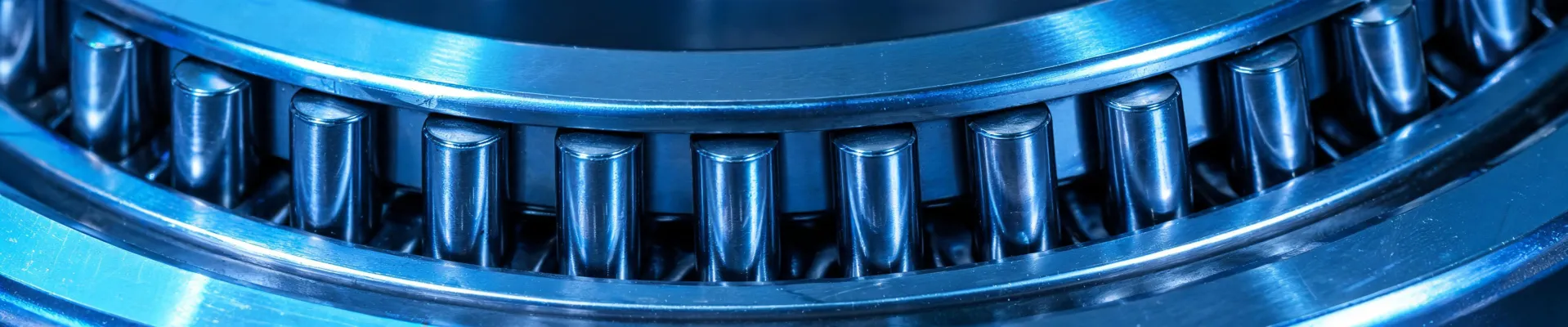
This is why I keep telling people that "it looks the same" isn't good enough. An INA needle bearing uses cylindrical rollers with a much higher length-to-diameter ratio than a ball bearing's balls. That geometry handles heavy radial loads in a thin cross-section. A ball bearing carries load on point contacts. A needle bearing carries load on line contacts. Swap one for the other because the outer diameter is close, and you're asking for early failure.
How Ball Bearings Are Made—and Why It Matters
Understanding what separates a bearing that lasts from one that doesn't comes down to the manufacturing process. This is where the "how ball bearing made" question stops being trivia and starts affecting your production uptime.
A quality ball bearing starts with high-carbon chrome steel, melted to precise metallurgical specs for cleanliness and alloy content. The rings are forged, then turned, then ground. The raceways are honed to tolerances measured in microns—surface finishes in the single-digit micro-inch range. The balls or rollers themselves are sorted to diameter differences of less than a micron.
Bearing tolerance classes follow ISO 492. P0 is the standard grade for general industrial use. Higher precision classes, like P6 and P5, exist for high-speed spindles and critical machinery. Most applications don't need ultra-precision grades. What you need from any bearing manufacturer is consistent execution of the standard.
Cheap bearings often cut corners somewhere in that chain. Softer steel. Skipped honing passes. Thinner cages. Lighter seals. They run fine at first, because the geometry is still close. Then the microscopic differences add up—noise, heat, vibration—and eventually, failure.
The bearing in Dan's conveyor didn't fail because it was made poorly. It failed because it was the wrong type for the application, installed by someone who valued convenience over verification.
The Second Problem We Almost Missed
While we waited for the correct replacement to arrive, I asked our technician to check the rest of line three. Standard practice after a catastrophic failure: look at the neighbors.
Good call. The take-up pulley on the same conveyor had an INA pillow block bearing that was wearing unevenly. It hadn't failed yet. It would have, within weeks. The housing bolts had loosened over time, tilting the bearing slightly. You could see the wear pattern in the raceway—polished on one side, rough on the other.
We fixed it on the spot. Re-torqued the housing, realigned the shaft, repacked the grease. One hour of labor. If we hadn't caught it, that would've been a second downtime event a month later.
I want to say we catch problems like this all the time. That's not true. We catch them when clients let us look.
The Overnight Race and the Wrong Seal
The correct INA needle bearings normally ship in four to six days from our warehouse. The client's line was losing about $3,500 per hour in production. Waiting wasn't an option.
We found a single unit in stock at another branch, 300 miles away. Dan approved the overnight freight—$220 on top of the $52 bearing. The total cost of parts and shipping: under $300, plus the technician time.
If I remember correctly, the freight was actually a bit higher. $265, give or take. Doesn't change the picture.
The bearing arrived Saturday morning. At 9:15, my technician sent me a photo with two words: "Wrong seal."
He was right. The part I'd ordered was correct for the bearing dimensions, but I hadn't verified the sealing configuration. The original was a shielded version—two metal shields, one on each side. I ordered an open bearing. In a stamping plant full of metal dust, an unsealed bearing would fail in a matter of weeks.
My mistake. Pure number-checking failure.
We got lucky. A local distributor had the sealed version on the shelf. Added three hours to the repair and a permanent note in my head to always check seals.
A Checklist Born From a Mistake
Here's the honest truth: we didn't have a formal verification process for emergency bearing orders. The "checklist" was memory, and memory failed.
Now every rush order goes through three steps:
- Confirm the original part number from a nameplate, manual, or maintenance record. "It looks like" doesn't count.
- Check sealing and cage specs separately from dimensions. That's where most mismatches live.
- Ask about the application itself. Radial or axial load? Clean or contaminated environment? Constant or variable speed?
That checklist might seem obvious. It wasn't obvious enough in the moment.
The Bearing That Ran for 11 Years
Dan showed me something interesting while we waited. On line two, the main drive assembly had been running for 11 years without a single bearing replacement. It was a FAG spherical bearing, size 22216, in a heavy-duty flange housing. The maintenance log showed five inspections over the decade. Clearance readings stayed within spec every single time.
INA and FAG are sister brands under the Schaeffler Group (schaeffler.com). That FAG bearing's design—two rows of barrel-shaped rollers on a sphered outer ring—lets it self-align when the housing deflects under load. A rigid bearing in that spot would have failed years ago. The spherical bearing's ability to accommodate misalignment is exactly what the application demanded.
That bearing cost roughly $400 a decade ago. About $36 per year of protection for a $2 million machine.
That's the math nobody does when they're comparing bearing prices.
So, What's the Bottom Line?
I'm not going to tell you every bearing needs to be premium. That would be dishonest, and it would make people tune me out when it actually matters.
If you have a low-speed, low-load application, where a failure costs you an hour of labor and a $25 part—buy the generic bearing. Genuinely. It doesn't matter.
But if you have a production line where downtime runs thousands of dollars per hour, or equipment that's expensive to access, pay attention to what's inside the housing. The bearing is usually the smallest line item on the invoice. It's also the biggest factor in your uptime.
The "cheaper is fine" mindset comes from an era when production equipment ran slower and tolerances were more forgiving. That era is over. Modern machinery spins faster and pushes harder. The bearing selection and installation process needs to catch up.
Dan's line restarted Sunday morning. Total downtime: about 36 hours. Parts and labor: around $1,800. Production loss: six figures. The root cause: a $12 savings on the wrong bearing, installed years earlier.
Dan replaced the remaining generic bearings on that conveyor with proper INA bearings the following week. He also adopted the three-step verification checklist. He told me last month it's already caught two potential mismatches.
By the way—the dentist appointment? I made it. Barely.

Elena Markovic
Elena Markovic is an independent industrial motor and drive systems analyst covering induction motors, servo motors, stepper motors, and variable-frequency drives. She examines IEC 60034-30-1 efficiency classes, IEC 61800-9-2 drive-system losses, speed-torque curves, duty cycles, thermal limits, and feedback compatibility across operating envelopes. Her evidence-led guides help OEM engineers and plant teams select efficient motion packages, plan integration, and reduce commissioning risk.