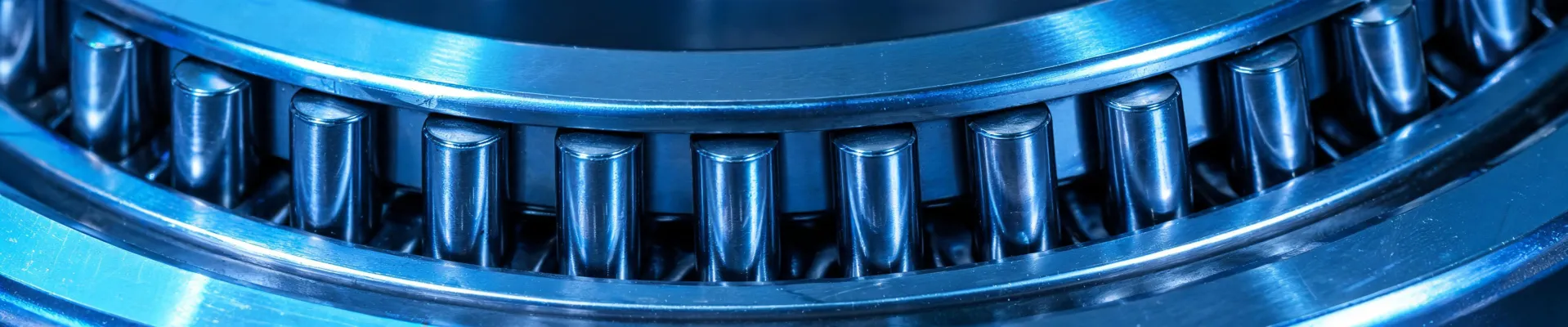
When someone asks me what VFD stands for, the short answer is variable frequency drive. But the long answer starts in March 2024, when a 36-hour bearing rescue reminded me how easy it is to sell ceramic ball bearings for the wrong reason.
I coordinate expedited supply for an industrial bearing distributor. Not the factory. The channel. I've been doing this for fourteen years, and rush orders don't surprise me anymore. Customers call with part numbers, with grainy photos, or with a browser tab still open on ina-bearings. That last one doesn't bother me. It usually means they know the brand but not exactly which bearing they need.
The Call at 9:47
The call came in on a Tuesday. A packaging plant had stopped. The line was scheduled to restart Thursday night, and the maintenance team had less than 36 hours to get the machine moving again.
The failed component was an INA roller bearing in a carriage that drove the infeed conveyor. It wasn't a complicated bearing to identify. The challenge was that the normal route for a replacement went through a warehouse that could take four to five days. I found one in a regional distributor's stock about six hundred miles away, arranged the freight, and thought we were done.
Then the plant manager asked a second question.
"Since we're already doing a rush order," he said, "can you quote us ceramic ball bearings for the motor we're adding a VFD to next month?"
The Second Question
This is where I almost made a mistake. In my head, the shortcut was already in place: VFD plus motor equals ceramic ball bearings. I've been around long enough to see the logic repeated over and over. The VFD creates shaft currents. Ceramic balls don't conduct current. So ceramic ball bearings must be the answer, right?
Not necessarily.
When I first started handling these requests, I sold ceramic ball bearings to almost every customer who mentioned a VFD. It took a couple of awkward follow-up calls to teach me that I was skipping the diagnostic part. The question shouldn't start with what bearing to sell. It should start with why the old bearing failed.
In an AC motor, the rotor rides on a ball bearing at the drive end. If shaft voltages get high enough, current can arc through the bearing's oil film and leave washboard-like fluting on the race. You almost can't miss that pattern once you've seen it. Ceramic ball bearings can interrupt that current path because the ceramic rolling elements are electrically insulating.
But there's a catch. Ceramic ball bearings are not one single product. A hybrid bearing uses steel rings with ceramic balls. A full ceramic bearing uses ceramic for both the rings and the rolling elements. They behave differently under load, temperature, and speed.
What VFD Stands For—and What It Doesn't Tell You
So yes, VFD stands for variable frequency drive. It changes the frequency and voltage supplied to an AC motor to control its speed and torque. But the acronym does not tell you whether your motor needs ceramic ball bearings.
A VFD can cause bearing currents. Whether it actually does depends on things like cable length, grounding, motor frame design, drive carrier frequency, and whether the system has shaft grounding. There's a whole engineering standard for this—IEC 60034-17 covers converter-fed AC motor applications. A good motor shop or VFD engineer will reference it. A good bearing supplier should at least know enough to ask for it.
In this case, the plant manager hadn't seen any fluting yet. The VFD wasn't even installed. He was ordering ceramic ball bearings because the drive vendor mentioned it during the sales conversation. That's not a root cause. That's a hypothesis without evidence.
I told him as much. "Here's what I know," I said. "If you had shown me a bearing with electrical fluting, I would be more comfortable recommending a ceramic hybrid ball bearing. But you're asking me to spec something for a motor I haven't seen, connected to a drive that isn't installed, through an electrical system I haven't measured. That's outside my lane."
The Boundary I Had to Respect
I'm a bearing specialist. I know radial load, speed, lubrication, sealing, and shaft fit. I don't wire VFDs, and I don't design grounding systems. I can talk about how a drive affects a bearing, but I can't promise that a ceramic ball bearing fixes a poorly installed VFD system.
That honesty probably cost me a small commission. It also probably saved me a headache six months later, when the real problem might have shown up again and the plant manager would have blamed the expensive bearings I pushed on him.
I'd rather work with a specialist who knows their limits than a generalist who overpromises. That's what I told the plant manager. He didn't argue. He just asked if I could recommend someone who could do the electrical side. I gave him a motor shop I trust, and I focused on what I could control: getting the INA bearings to the plant on time.
The Delivery
The INA roller bearing arrived Wednesday afternoon. A courier brought it the last sixty miles, and I received a photo of the new bearing sitting in the carriage before the line restarted. The plant made its Thursday evening start.
The ceramic ball bearing quote stayed in my drafts.
A few weeks later, the manager called back. The motor shop measured the shaft voltage on the existing motor and found it was below the level that causes bearing damage. The VFD installer added a suitable grounding ring as a precaution, and the standard motor bearing was left in place. They didn't need ceramic ball bearings at all.
Bottom Line
If the phrase that led you here was what VFD stands for, here is your answer: variable frequency drive. But don't let the acronym carry more weight than it should.
Bearings fail for many reasons. Replacing a damaged INA roller bearing with the same type is often the right move. Upgrading a VFD motor bearing to ceramic can also be right—when the evidence says you need it. But the decision should be based on data, not on a salesperson's smooth explanation.
In my role coordinating rush orders, I've seen what happens when someone skips the diagnostic part and guesses. The part arrives on time, but the problem doesn't go away. That's worse than admitting you don't know something.
So the next time a supplier tells you that you need a specialty bearing, ask them why. If they can't explain it clearly, or if they rush past the evidence, find someone else. There are enough people selling parts. What you need is someone who knows when a part is actually the solution.
Elena Markovic
Elena Markovic is an independent industrial motor and drive systems analyst covering induction motors, servo motors, stepper motors, and variable-frequency drives. She examines IEC 60034-30-1 efficiency classes, IEC 61800-9-2 drive-system losses, speed-torque curves, duty cycles, thermal limits, and feedback compatibility across operating envelopes. Her evidence-led guides help OEM engineers and plant teams select efficient motion packages, plan integration, and reduce commissioning risk.