-
What makes INA bearings different?
-
Where do I find the official INA bearings website and catalog?
-
What should I know about INA pillow block bearings?
-
What is a needle roller bearing, and where would I use it?
-
What's the deal with a DC linear actuator?
-
What does VFD stand for, and why should a bearing buyer care?
I started handling parts purchasing for a mid-sized manufacturing plant in 2020. I'm not an engineer. I sit between operations and finance, so I care about uptime and invoices in equal measure. If you've ever tried to order bearings online, you know the labels get confusing quickly. These are the questions I get asked most—and the answers I wish I had when I first started.
What makes INA bearings different?
INA is a German bearing manufacturer and part of the Schaeffler Group. INA's bearing range covers roller bearings, ball bearings, needle roller bearings, and linear motion components. Their strength is design precision: you can pick a bearing for a specific load, speed, alignment, and lubrication condition, and it will do what the catalog says.
For someone like me, the key is the part number. I once skipped the cross-check because the box said INA and the dimensions looked right. That was the one time it mattered. The motor ran hot, the maintenance team lost half a shift, and we had to reorder the correct cage style. Now I verify every part number against the official Schaeffler catalog before purchasing. It takes two minutes and saves a lot of embarrassment. Trust me on this one: the part number is the whole game.
Where do I find the official INA bearings website and catalog?
The official source for INA bearings is the Schaeffler Group's website, schaeffler.com. Schaeffler also has an online product catalog where you can enter a bearing number and get dimensions, tolerances, and mounting details. As of February 2025, that is still the fastest way to verify a part.
There are a lot of 'INA bearings website' results that belong to distributors, not manufacturers. Many distributors are excellent, but their listings can have errors. If you order from one and the part number doesn't match the official catalog, the responsibility lands on you. The surprise for me wasn't the price difference between distributors. The surprise was how much time I wasted cleaning up a wrong part number because I trusted a third-party listing.
What should I know about INA pillow block bearings?
INA pillow block bearings are housed units that support rotating shafts. The housing is usually cast iron or pressed steel, and it holds a bearing insert that can handle a degree of misalignment. They're called pillow blocks because, well, they look a little like pillows.
If you're ordering one, the important details are shaft diameter, housing type, mounting holes, and the locking collar style. INA pillow block bearings use either set screws or eccentric locking collars. On applications where the shaft can reverse direction, the collar direction matters. I keep a note on our maintenance board that says the collar should be turned in the direction of shaft rotation. That note has saved more than one order.
What is a needle roller bearing, and where would I use it?
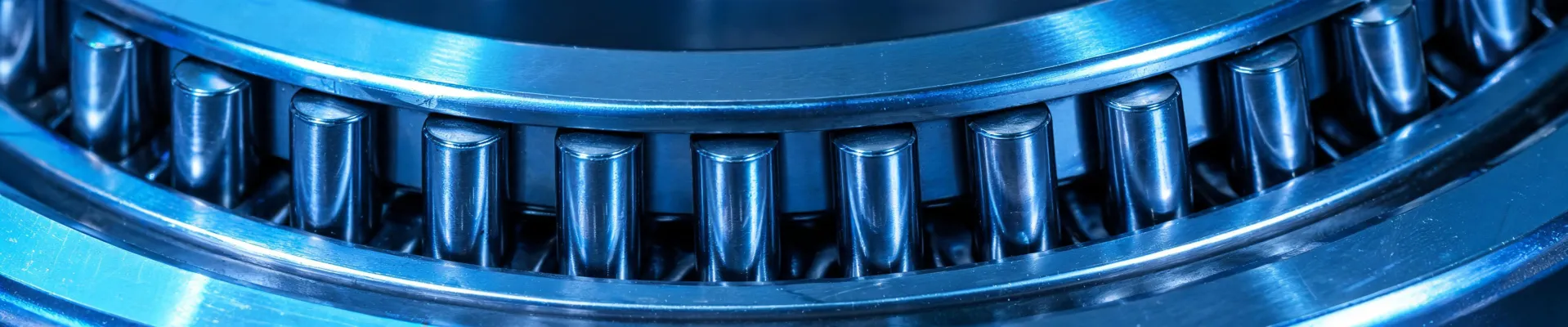
A needle roller bearing is a roller bearing with long, thin rollers, so it looks like it's packed with tiny needles. Because the rollers are thin, you can fit a lot of them in a compact space. That gives you high load capacity without a big housing.
You'll commonly find needle roller bearings in gearboxes, pumps, and automotive applications. They're great when radial space is tight. But they're less forgiving than ball bearings when it comes to misalignment. If the shaft is bent, the housing is worn, or the lubrication is insufficient, a needle roller bearing will let you know—quickly.
One thing I check before ordering is the speed rating. A needle roller bearing has limits, and running it above those limits is a fast way to create heat and premature failure. If you're not sure what the machine does, ask the maintenance team before you buy, not after.
What's the deal with a DC linear actuator?
This is one of those searches where the term can lead you down two different paths. A DC linear actuator is usually a compact electric device, often 12V or 24V, that pushes, pulls, or lifts something. It's what people think of for hatches, valves, adjustments, and other simple linear motion jobs.
INA's linear motion range is more about precision guidance: linear bearings, profile rail guides, and guide carriages used in machine tools and industrial automation. If you need repeatable accuracy and high load capacity in a guided motion axis, you're talking about an INA linear guide, not just a DC linear actuator. But if you just need a simple push/pull action, a DC linear actuator may be the practical, lower-cost solution.
Before buying any actuator, ask about duty cycle. A unit rated for 25 percent duty will run hot if you run it constantly. I've had more than one internal customer say it's just occasional adjustment when their process really meant every few minutes. Define 'occasional' before ordering, not after.
What does VFD stand for, and why should a bearing buyer care?
VFD stands for Variable Frequency Drive. It's a controller that changes the speed of an AC motor by varying the frequency and voltage of the electricity going to it. In plain terms, it's how you make a fixed-speed motor adjustable—and it saves a lot of energy in the process.
Here's the bearing connection: VFD-driven motors can produce electrical shaft currents. Those currents can arc through the bearing, creating tiny burns, pitting, and eventually a noise pattern called fluting. The fix is to use a bearing with insulation, like an INSOCOAT-coated bearing, or ceramic rolling elements. INA offers these types for motor applications.
So when someone asks 'what VFD stands for,' the answer is simple. The real question is whether the motor's bearings are protected. I now check the motor nameplate and the drive type before ordering any motor bearing. That five-minute check has kept me from replacing the wrong bearing twice.

Elena Markovic
Elena Markovic is an independent industrial motor and drive systems analyst covering induction motors, servo motors, stepper motors, and variable-frequency drives. She examines IEC 60034-30-1 efficiency classes, IEC 61800-9-2 drive-system losses, speed-torque curves, duty cycles, thermal limits, and feedback compatibility across operating envelopes. Her evidence-led guides help OEM engineers and plant teams select efficient motion packages, plan integration, and reduce commissioning risk.