I'm a procurement manager at a 200-person manufacturing company. I've managed our MRO component budget—about $180,000 a year—for six years, negotiated with more vendors than I like to admit, and documented every order in our cost tracking system. We've processed maybe 1,800 unique bearing line items since I started. Actually, closer to 2,100 if you count repeat releases. I'd have to check before giving you an exact number.
If you're typing 'ina-bearings' into the INA bearings website, you're probably not thinking about brand perception. You're thinking about dimensions, load ratings, and whether the part is in stock. That's fair. But after six years of watching bearings fail, I think you're missing the most important number on that page: total cost.
Stop buying bearings on unit price. I know that sounds like a strange thing for a procurement person to say. But the cheapest bearing is usually the most expensive one on the machine.
That's not just a catchy line. It's the conclusion I've come to from our cost tracking reports, from maintenance calls, and from the quiet frustration of customers who don't care why a machine failed. They only remember that it did.
The Invoice Is Not the Cost
When I audited our 2023 spending, I found that close to 40% of our bearing-related overruns came from emergency freight and replacement labor—not from the bearings themselves. That number stuck with me. It's tempting to think you can compare two bearing prices and know which one is cheaper. But that ignores the cost of downtime, the cost of a rushed delivery, and the cost of having a service technician stand around waiting for a part.
Here's a real example. We had a needle roller bearing in a carriage assembly that kept failing after about nine months. The replacement part was $12. The total cost to swap it—labor, lost production, the service call, the paperwork in our system—was closer to $1,800. The 'cheap' bearing was not cheap. It was a $12 part with an $1,800 ripple. What most people don't realize is that a bearing failure almost never appears on an invoice with a single cause. You see 'bearing replacement' and think the bearing was the problem. But if the housing bore is out of round, or the lubricant is wrong, you will change that bearing five times before someone checks the system.
In Q2 2024, when we switched one of our lines to a distributor that quoted a more realistic lead time, the unit price went up about 7%. But the emergency freight charges disappeared, and we stopped paying the 'handling' fee that had been on every order for two years. That's the kind of hidden cost that never shows up in a simple price comparison. I built a cost calculator after getting burned on those hidden fees twice. It includes the bearing price, freight, minimum order quantities, lead time, and an estimate for machine downtime. The bearings that look cheap on paper rarely win on that spreadsheet.
What Causes Thrust Bearing Failure? Stop Starting With the Bearing
I spend a lot of time on the INA bearings website checking dimensions, suffixes, and load ratings. But the question that matters more is: what causes thrust bearing failure? And the answer rarely starts with the part number.
A thrust bearing handles axial load. But axial load isn't the only thing that attacks it. Misalignment, edge loading, contamination, poor lubrication, and incorrect mounting preload all produce similar-looking damage. The bearing doesn't know whether it was stressed by load or by assembly error. It just fails. According to ISO 281, the calculated L10 rating life assumes clean, properly lubricated, correctly aligned conditions. In a real factory, those assumptions are the exception, not the rule.
I'm not a tribologist—I'm a buyer with a cost tracking system—but I've learned to ask the right questions before approving a replacement. Is the thrust face square to the shaft? Is the lubricator actually reaching the bearing? Is the bearing being pushed beyond its rated axial load? The INA technical documentation is good about this: it lists load ratings and speed limits, but it also shows mounting requirements. If you skip those details, you're not really buying a bearing. You're buying a warranty claim.
That's the oversimplification I see constantly: 'the bearing failed, so the bearing is bad.' It's tempting to think that. But it ignores the mounting surface, the lubrication interval, and all the things the original designer didn't anticipate—like the machine being moved to a hotter part of the plant. When someone asks me what causes thrust bearing failure, I usually answer with a question: what else changed in the system?
Quality Is Something Your Customer Feels
Now let's talk about the part that isn't in any catalog: customer perception.
A machine that squeaks, vibrates, or drifts out of tolerance doesn't just fail. It erodes trust. The customer never saw the bearing specifications. They saw an assembly that didn't perform. That's why quality is a brand issue, not just a maintenance issue. Every bearing you specify is a tiny ambassador for your company. It sits inside a gearbox or actuator, unseen. But when it fails, the customer doesn't say 'the bearing failed.' They say 'this machine is unreliable.'
The need for quality gets even clearer when you're working on something like a linear actuator with encoder. The encoder tells the controller where the carriage is. But if the bearing inside the actuator has play, the actual position won't match the feedback. Suddenly the accuracy of a $2,500 linear actuator rests on a bearing that cost $40. That's a quality perception problem hiding inside a precision product.
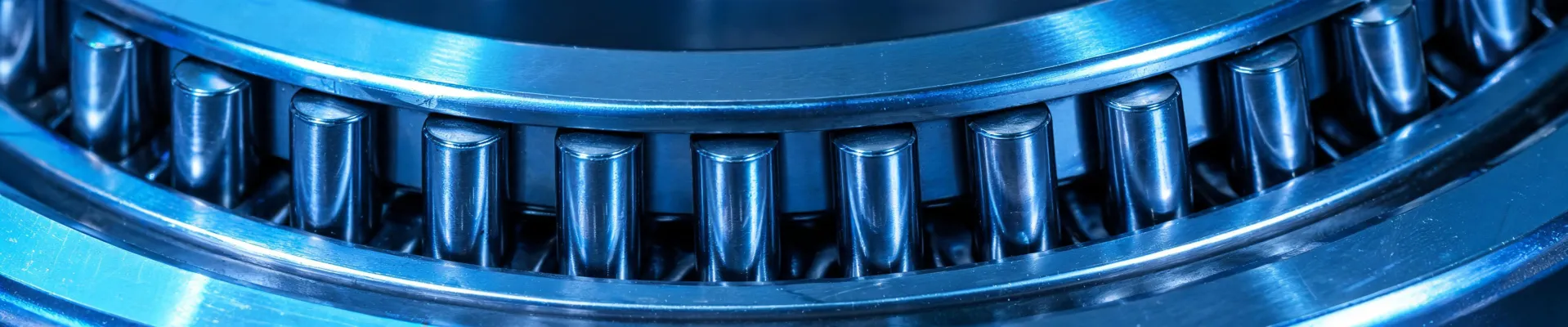
Needle roller bearings are a good example of why the right selection matters. Their small-diameter rollers give you a compact cross-section and high load capacity in a small space, which is why they show up in linear guides and compact actuators. But the same compactness means raceways are sensitive to dirt and misalignment. You can't treat a needle roller bearing like a generic bushing. It's a precision component that happens to look simple.
There's something satisfying about opening our cost tracking system and watching a failure line disappear after we standardized on better bearings. We paid a little more per unit. In return, our internal rework rate dropped, customer-reported issues dropped, and I stopped getting urgent emails beginning with 'the machine is down again.' That's the payoff no one quotes in advance.
But What About Budget? I Get It.
I realize all of this sounds like someone who doesn't care about spending. I do. Budgets are real. I've been the one saying 'that's 12% over the previous part' more times than I want to admit. And to be fair, not every application needs a premium bearing. Some machines run lightly and rarely. If you're buying replacement parts for low-risk equipment, a standard bearing is usually fine.
But here's something vendors won't tell you: the first quote on a bearing often assumes minimum order quantities and standard lead times. The real cost is in the expedite fees, the extra inventory you carry 'just in case,' and the maintenance hours nobody budgets for until after the breakdown. Granted, this requires more upfront work. But it saves time later.
That's why I push back when someone wants to downgrade a bearing to save thirty cents. Not because every machine needs a premium bearing, but because we should make that call based on risk, not just price. If the machine is doing heavy work, or it's the last step before a customer delivery, the quality choice is the cost choice. Take this with a grain of salt—I'm generalizing from our own machines, not from every bearing application ever built. But I've yet to see a bearing failure that was cheap.
The Bottom Line
So the next time you open the INA bearings website, don't just look for a matching number. Ask what the bearing has to survive. Ask what happens when it doesn't. And if someone asks you what causes thrust bearing failure, don't answer with a part number. Answer with the system.
Because from my side of the spreadsheet, quality isn't a premium. It's a hedge. It protects your uptime, your customer's confidence, and your own reputation—even if it never shows up as a line item on a quote. That's the kind of cost I can justify every time.

Elena Markovic
Elena Markovic is an independent industrial motor and drive systems analyst covering induction motors, servo motors, stepper motors, and variable-frequency drives. She examines IEC 60034-30-1 efficiency classes, IEC 61800-9-2 drive-system losses, speed-torque curves, duty cycles, thermal limits, and feedback compatibility across operating envelopes. Her evidence-led guides help OEM engineers and plant teams select efficient motion packages, plan integration, and reduce commissioning risk.